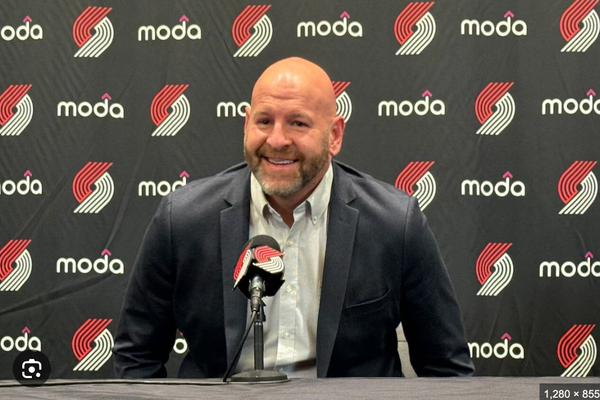
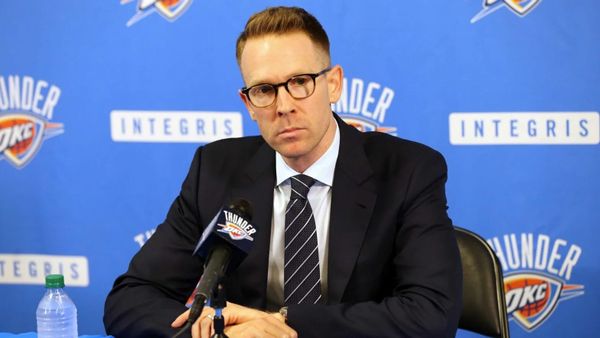
AK wasn't playing Presti's cards. He was playing his own
The Caruso/Giddey trade looks roughly even on paper. It wasn't. A case study in what NBA trade analysis gets wrong — and the poker concept that exposes it.
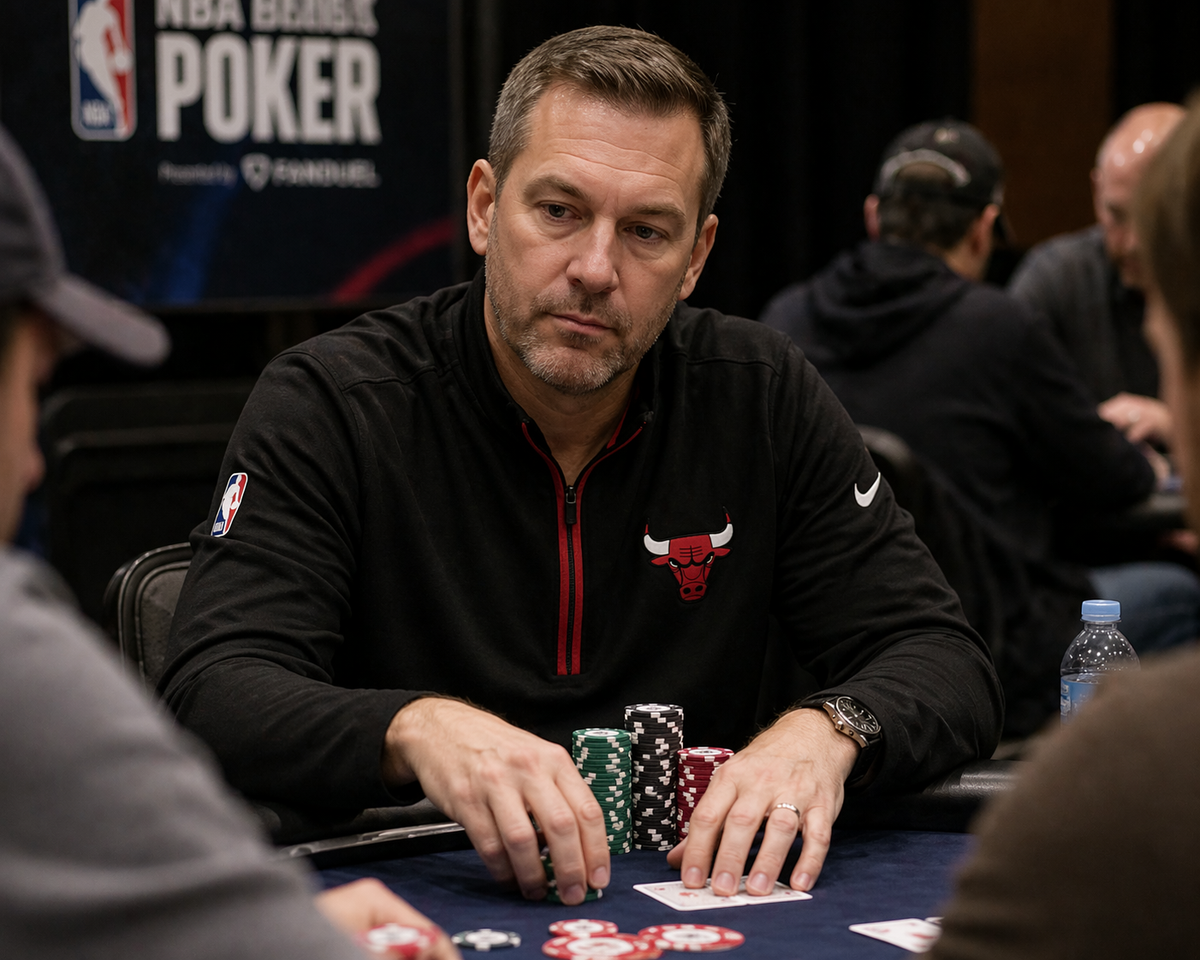
Here is how most people evaluated the Giddey-for-Caruso trade: Giddey is 21 and has playmaking upside. Caruso is 30 and a role player. Chicago got the younger, higher-ceiling piece. Oklahoma City got a defensive specialist. Roughly even.
This analysis is wrong at the framework level. It evaluates both players as abstract assets with universal value. It does not ask the question that actually determines whether a trade is good or bad: what did each team need, and did they get it?
That's the poker concept at the heart of this series. In poker, you don't evaluate your hand in isolation — you evaluate it relative to what your opponent is holding, what the board looks like, and what the pot odds are for your specific situation. A pair of aces is a great hand before the flop. It can be a terrible hand by the river. Context is everything. Abstract value is almost nothing.
What Presti's Hand Looked Like
By the 2024 playoffs, Giddey had become the weakest link in OKC's closing lineup. Dallas ran pick-and-roll at him relentlessly — hunting a player who couldn't guard at the point of attack and couldn't punish defenses for helping off him. His closing minutes cratered. Presti told him he'd move to the bench going forward.
The problem: Giddey was extension-eligible, reportedly seeking $120M+ over five years — roughly 15% of the salary cap. For a player OKC couldn't trust in playoff lineups, that was an impossible number. Presti's hand looked like this: a depreciating asset headed into a contentious extension negotiation, holding a specific roster hole (elite wing defense, shooting, championship experience) that Giddey couldn't fill.
Presti needed a Caruso. He didn't need Caruso's age to be 25. He needed what Caruso does: guard the league's best guards and wings, space the floor at 40%+ from three, and raise a locker room's competitive temperature without needing the ball. OKC had SGA, Holmgren, and Williams for that. What they needed was the piece that lets those three operate without a defensive liability dragging down their closing lineups.
Presti had a specific, identifiable need. He had an asset whose value to OKC had collapsed. And he found a trade partner holding exactly the piece he needed.
What Chicago's Hand Looked Like
The Bulls in 2024 were, charitably, in Phase 1 of a rebuild that hadn't been officially declared. They needed youth, playmaking, and upside — the building blocks of a next core. Giddey checks those boxes on paper. And AK, to his credit, saw real value in Giddey's playmaking and age.
But here's what AK didn't do: he didn't evaluate the trade from Presti's perspective. He evaluated Giddey's value in the abstract — what Giddey is, not what Giddey was worth to OKC. And by doing that, he missed the key information: Presti was not trading a player he valued. He was converting a liability into a precisely-fitted weapon.
In poker terms: AK looked at his own cards. He didn't look at the board. He didn't ask why Presti, with no obvious reason to move a 21-year-old playmaker, was suddenly willing to do a 1-for-1 with a 30-year-old role player and no picks attached. The answer — Giddey was unplayable in OKC's playoff lineups and headed into a salary standoff — was available if you asked the right question. AK didn't ask it.
The Giddey that Chicago acquired is not the same Giddey that OKC no longer wanted. His upside may eventually justify the trade. But Chicago paid full price for an asset Presti had already discounted to zero in his own playoff math.
The Poker Concepts in Play
Playing your opponent's cards: Presti knew Giddey's value to OKC had collapsed. AK didn't ask why. The information asymmetry is the trade margin.
Pot odds vs. situational need: Caruso at 30 looks like a declining asset in the abstract. In OKC's specific situation — a young team one defensive upgrade away from becoming a genuine championship threat — Caruso's age was irrelevant to his fit. Situational need overrode abstract value.
Fold equity: Presti had leverage he didn't have to use explicitly. Giddey didn't want a bench role. The extension negotiation was going to be painful. OKC's credible threat to simply let the situation deteriorate forced Chicago into a trade on Presti's terms.
No picks attached: The fact that Presti moved Giddey without extracting a draft pick is the tell. In normal asset management, a 21-year-old playmaker moves for at least a second-round pick. Presti moved him clean — because the fit precision of Caruso was worth more than the pick, and because attaching picks would have slowed negotiations with a team that had to be convinced Giddey was worth acquiring.
The Verdict
Nationally, the trade was framed as "highway robbery for OKC." That's correct but incomplete. It was highway robbery because Presti was selling something he no longer needed at full market price to a buyer who didn't understand why it was on sale. That's not luck — it's information advantage systematically exploited.
AK isn't incompetent. Giddey may grow into exactly what Chicago needs. But the trade will go down as a Presti masterclass not because of the players involved — but because of the decision-making framework behind it. He played his hand. He played Chicago's hand. And he played the board.
AK played only his own cards. In poker, that's how you lose a hand you thought you were winning.